
-
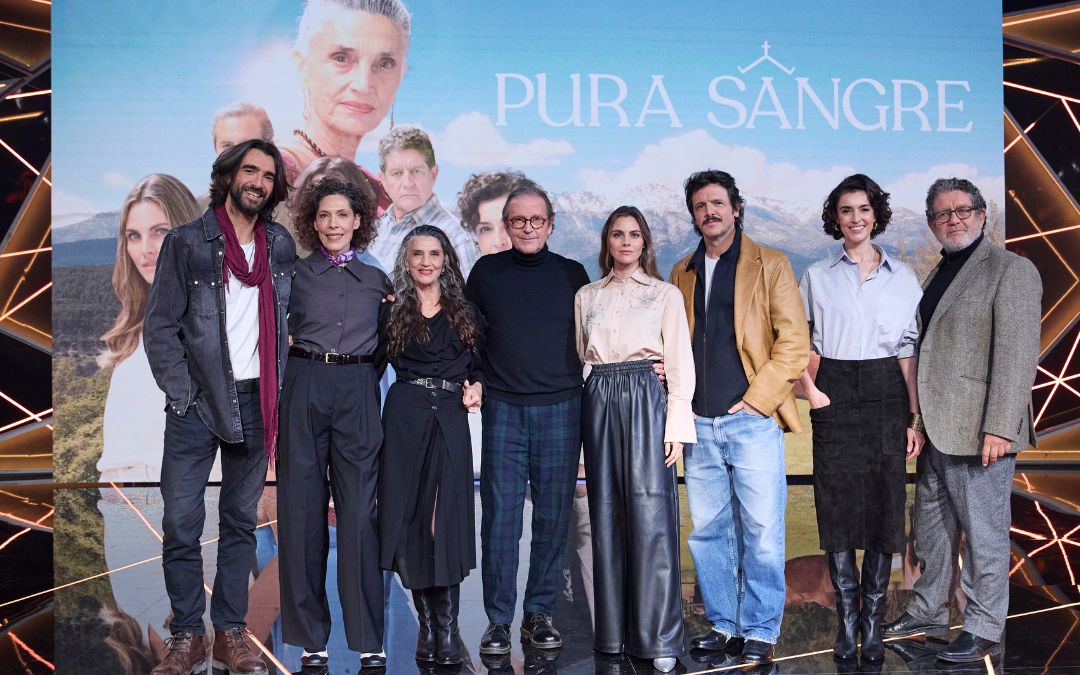
Ángela Molina, Pep Munné, Amaia Salamanca, Aitor Luna, Blanca Romero, Jaime Zatarain, Maru Valdivielso and Pedro Casablanc lead the cast of this fiction series that blends drama, thriller, crime investigation and romance, set in the equestrian world.
-
Nearly 90 actors, 130 horses, 1,400 square meters of sets, more than 80% of scenes filmed in striking outdoor locations across 25 natural settings in Castilla y León and the Community of Madrid, and a 17-week shoot shape a large-scale production with a strong visual identity.
What family doesn’t keep secrets? Where do the real threats lie? How far do loyalty and love go when power and money come into play? These are some of the questions raised by ‘Pura Sangre’, Telecinco’s upcoming new fiction: an intense ensemble drama combining family conflict, romance, thriller and mystery at the heart of a powerful aristocratic saga, with the rural and equestrian setting as a backdrop and a criminal investigation as the catalyst for all its storylines.
The story begins at La Galana, the stately estate of the Marquises of Monteclaro, when Caporal, the stud farm’s most valuable stallion, is found poisoned along with several foals. The investigation reveals that the conflict dates back years and that what is truly at stake are family secrets, intersecting interests, historical rivalries and social tensions that affect not only the family and the estate’s workers, but also the entire Camponuevo region and its inhabitants.
A prestigious cast
Produced in collaboration with Shine Iberia (Banijay Iberia), ‘Pura Sangre’ stars Ángela Molina, Pep Munné, Amaia Salamanca, Aitor Luna, Blanca Romero, Jaime Zatarain, Maru Valdivielso and Pedro Casablanc, leading a cast of nearly 90 actors, including Eva Ugarte, Berta Bolufer, Belén López, Miquel Fernández, César Mateo, Juanfra Juárez, María García-Concha, Pablo Álvarez, Pilar Gómez, Alfredo Villa, Nuria Gómez and Carla Domínguez, among others. The series is directed by Rómulo Aguillaume (‘Mar Afuera’, ‘Las Noches de Tefía’) and Belén Macías (‘El Patio de mi cárcel’, ‘Marsella’).
Sinopsis y personajes principales
La familia y el legado 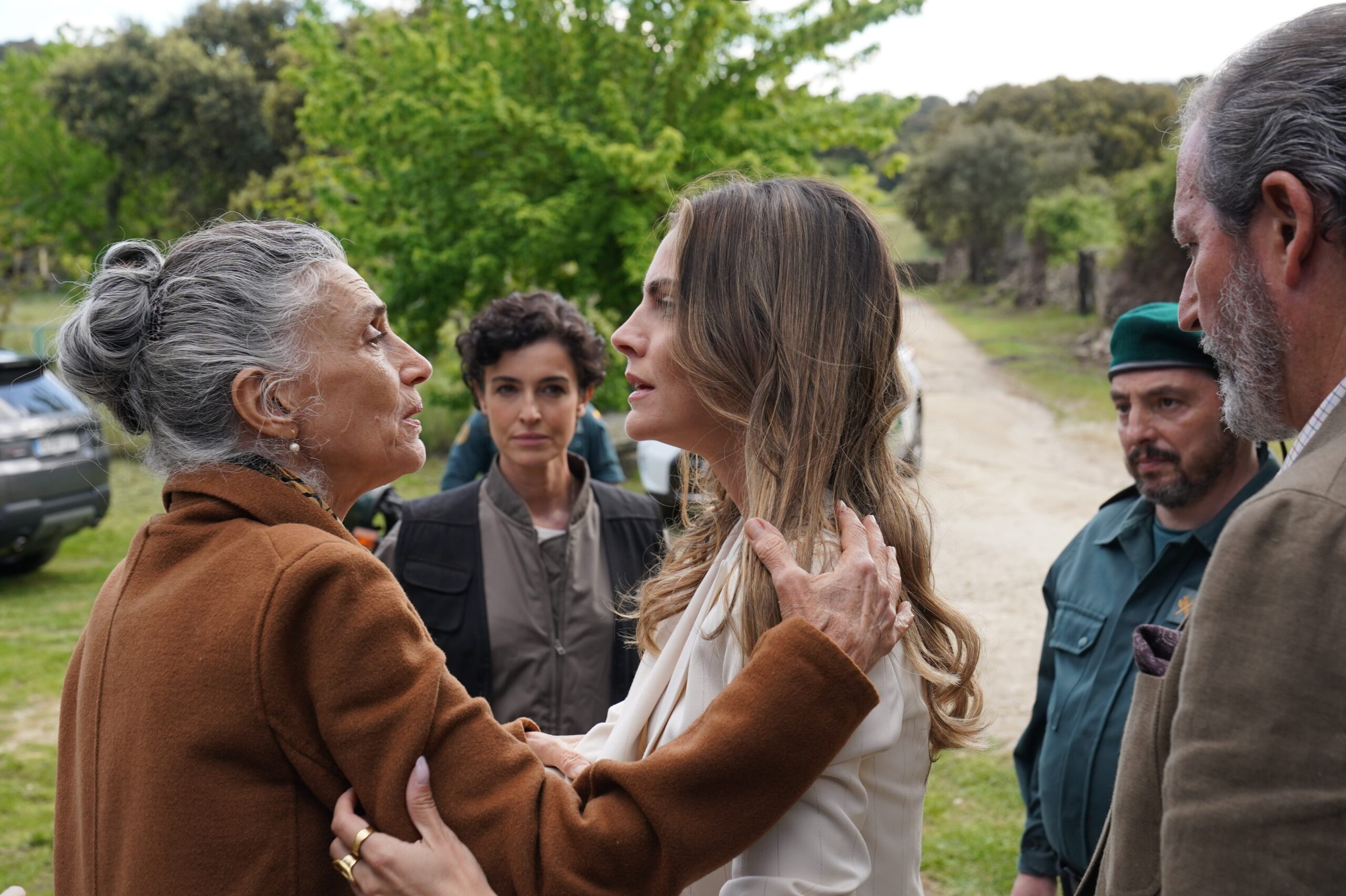
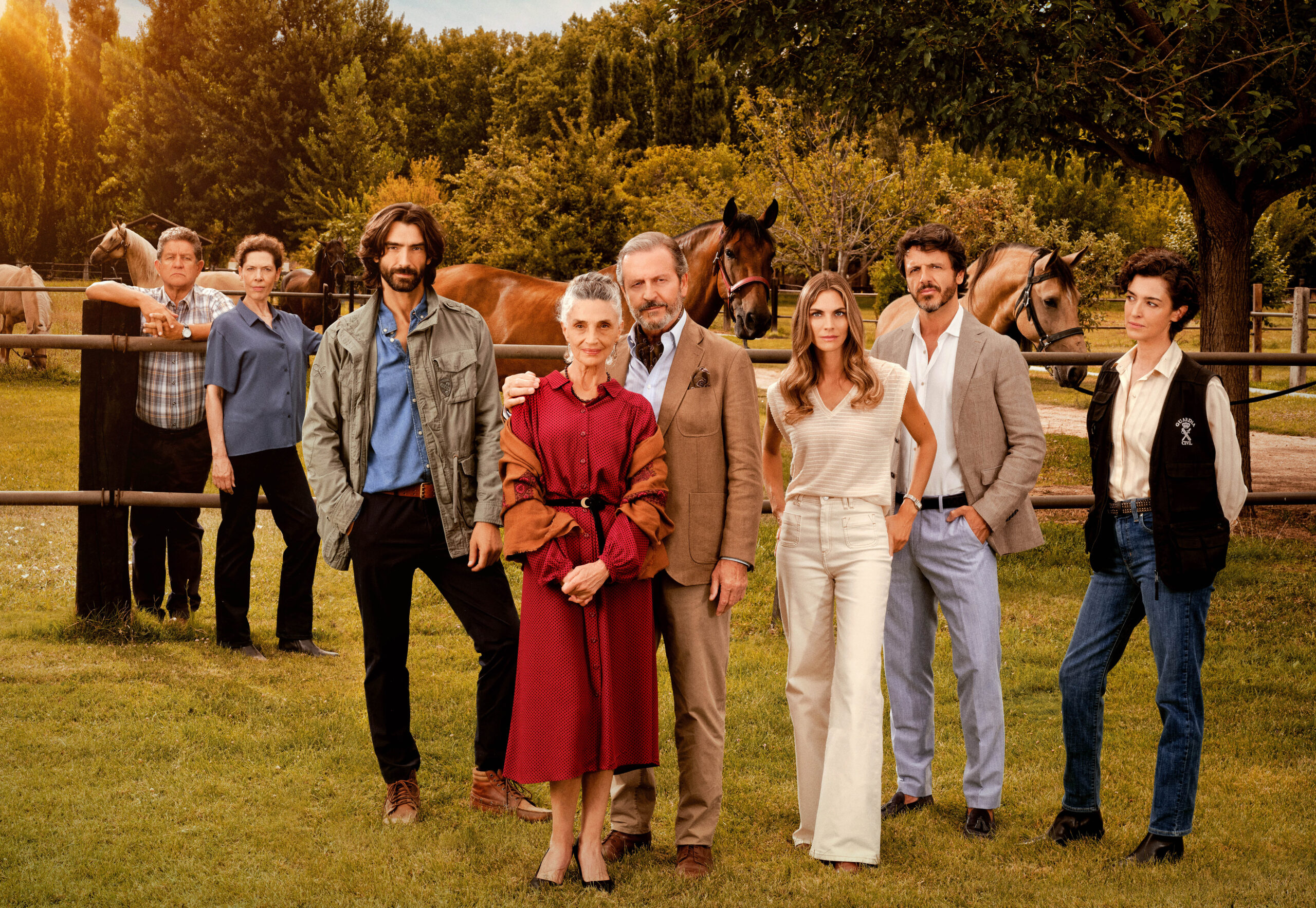
‘Pura Sangre’ delves into the world of La Galana, a stately estate linked to the Marquisate of Monteclaro for generations, dedicated to agriculture, livestock, hunting and, above all, the breeding of purebred horses.
At the head of the lineage is Rosario del Monte (Ángela Molina), heir to the Marquisate of Monteclaro, a woman of strong convictions, deeply connected to the land and to a simple way of life, who has never wished to adopt the social lifestyle befitting her status or move to Madrid, despite long-standing health problems. By her side, her husband José Antonio Acuña (Pep Munné) manages the company that oversees the family’s assets with an ambitious and innovative vision that clashes with Rosario’s attachment to tradition, inherited from her father, creating constant tension between progress and legacy.
Their children grew up removed from the daily routine of La Galana. Miranda (Amaia Salamanca), a senior executive at a financial consultancy and future heir to the family legacy, is a successful, elegant woman and a regular figure in the social pages, though few know her true personality. She is married to Jacobo Valverde (Jaime Zatarain), a childhood friend and former renowned show jumper, who projects the image of the perfect husband and son-in-law. Very different is Héctor (Aitor Luna), the eldest son, sent abroad by his father to study. A war reporter and nomad by choice, he is drawn to extreme scenarios and risk.
The investigation
The poisoning of Caporal shakes the foundations of both the family and the surrounding community. Newly arrived SEPRONA lieutenant Alicia Hermida (Blanca Romero), a charismatic, talkative and unconventional woman, takes charge of the case and soon discovers that the sabotage is merely the latest episode in a conflict years in the making, with economic, political, social and personal roots, and a web of secrets affecting the entire Acuña family and their environment. What initially seemed like a peaceful destination where Lieutenant Hermida could fulfill her dream of becoming a mother turns into an increasingly complex scenario, also marked by an unexpected relationship that further strains the fragile balance of the Acuña universe.
The setting
In this tension-filled ecosystem, Consuelo Cifuentes (Maru Valdivielso), the caretaker of La Galana, plays a key role. Discreet and loyal, her family has served the marquisate for generations and knows every corner of the estate and every story hidden within it. Alongside her, Marta Uribe (Eva Ugarte), the stud farm’s veterinarian, maintains a secret relationship with Héctor whenever he returns home.
The Acuña del Monte family has no shortage of enemies. For many, the main suspect in the poisoning is Fernando Vázquez (Pedro Casablanc), president of the local agricultural cooperative and a long-standing rival of the marquisate, an enmity inherited from his father. Years ago, he had a brief romance with Consuelo. Divorced for years, he lives with his daughter Camino (Berta Bolufer), a young woman trained in graphic design and programming who returned to the village after the pandemic and who, upon meeting Héctor, begins to question everything said about the Acuña del Monte family.
Locations and filming
‘Pura Sangre’ was filmed over 17 weeks in 25 natural locations across Castilla y León and the Community of Madrid. More than 80% of the scenes were shot outdoors, giving the series a strong visual identity tied to the rural landscape and the equestrian world. To recreate La Galana estate and the village of Camponuevo, 1,400 square meters of sets were built.
The stud farm is one of the series’ major protagonists: 130 horses took part in the filming, coordinated by Richard Cruz, a specialist in providing animals for major productions such as ‘Braveheart’, ‘Gladiator’ and ‘Alexander’.
Sustainability on set
During the filming of ‘Pura Sangre’, the production worked with Mrs. Greenfilm, a leading consultancy in sustainable productions, with the aim of minimizing its carbon footprint. Measures included replacing diesel generators with electric ones, promoting the rental and reuse of costumes and sets, optimizing transport routes and reducing single-use plastics.
In addition, one of the series’ storylines reflects on how certain sustainable technologies can generate social tensions and conflicts in rural environments, integrating the environmental debate into the narrative itself.